Innovation

A surgical strike in the battle against infections

A new technology that delivers antibiotics to the exact site where infections have taken hold in bones and tissue could become doctors’ new weapon when treating serious infections. The company behind the technology expects to test it in humans within a few years.

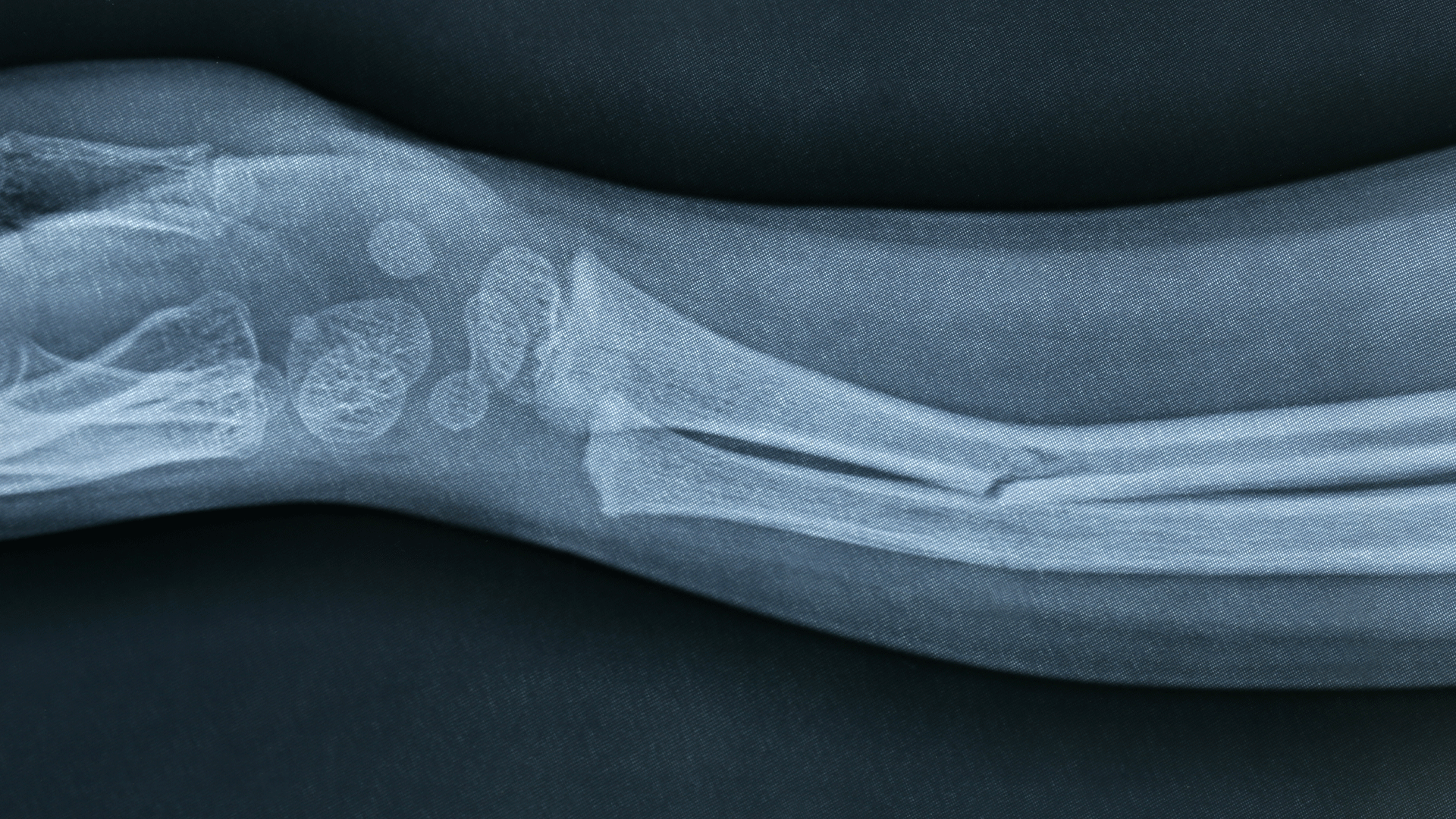
X-ray of a broken arm. Photo: Colourbox
The DTU spinout company Precision Antibiotics has designed an injectable drug depot that, when injected, releases antibiotics locally and precisely where infection has occurred after, for example, a bone fracture. Photo: Colourbox
"With our technology, we can deliver drug depots deep and with great accuracy into both bone and soft tissue, from where the drug is released in very high concentrations over several weeks—something competing technologies cannot do."
CEO Jonas Rosager Henriksen Precision Antibiotics

Injectable medicine depot

Precision Antibiotics has designed an injectable depot-based antibiotic platform which, upon injection, forms a material that releases a combination of the two existing antibiotics, namely gentamicin and clindamycin. The two antibiotics have different properties, but the researchers have optimized them so they can be released in a controlled manner from the same depot.

Unlike competing technologies, the drug depot can be administered using a standard syringe and needle. This gives doctors a unique opportunity to accurately and effectively deliver the treatment to and around the infected area, in both bone and soft tissue, thereby achieving very high concentrations at the site.

In trials using advanced preclinical models, researchers have achieved a local concentration of the drug which, over three weeks, is between 100 and 1,000 times higher than with systemic antibiotic delivery (administered either orally or intravenously). Preclinical models are used to test drugs in a controlled setting before they are tested on humans.

“With our technology, we can deliver drug depots deep and with great accuracy into both bone and soft tissue, from where the drug is released in very high concentrations over several weeks—something competing technologies cannot do. At the same time, we keep the delivered antibiotics completely localized, which spares healthy bacteria elsewhere in the body,” explains CEO Jonas Rosager Henriksen.

It is precisely this combination of high local efficacy and limited exposure elsewhere which he highlights as one of the technology’s key strengths.

Facts

In addition to the clear economic and therapeutic potential of Precision Antibiotics in the treatment of infections, the company believes that the ability to limit the overall use of antibiotics by delivering effective local depots is also a step forward in the fight against the global challenge of antibiotic resistance.

According to the WHO, antibiotic resistance is one of the greatest threats to public health. The WHO estimates that in 2019, resistant bacteria were directly responsible for just under 1.27 million deaths worldwide and contributed to a further 4.95 million deaths – and they expect these figures to rise.

However, if doctors can tackle infections by administering antibiotics locally, the need to administer them orally or intravenously over a longer period is reduced. This is one of the cornerstones in the fight to limit the development of antibiotic resistance, thereby benefiting both the patient and society.

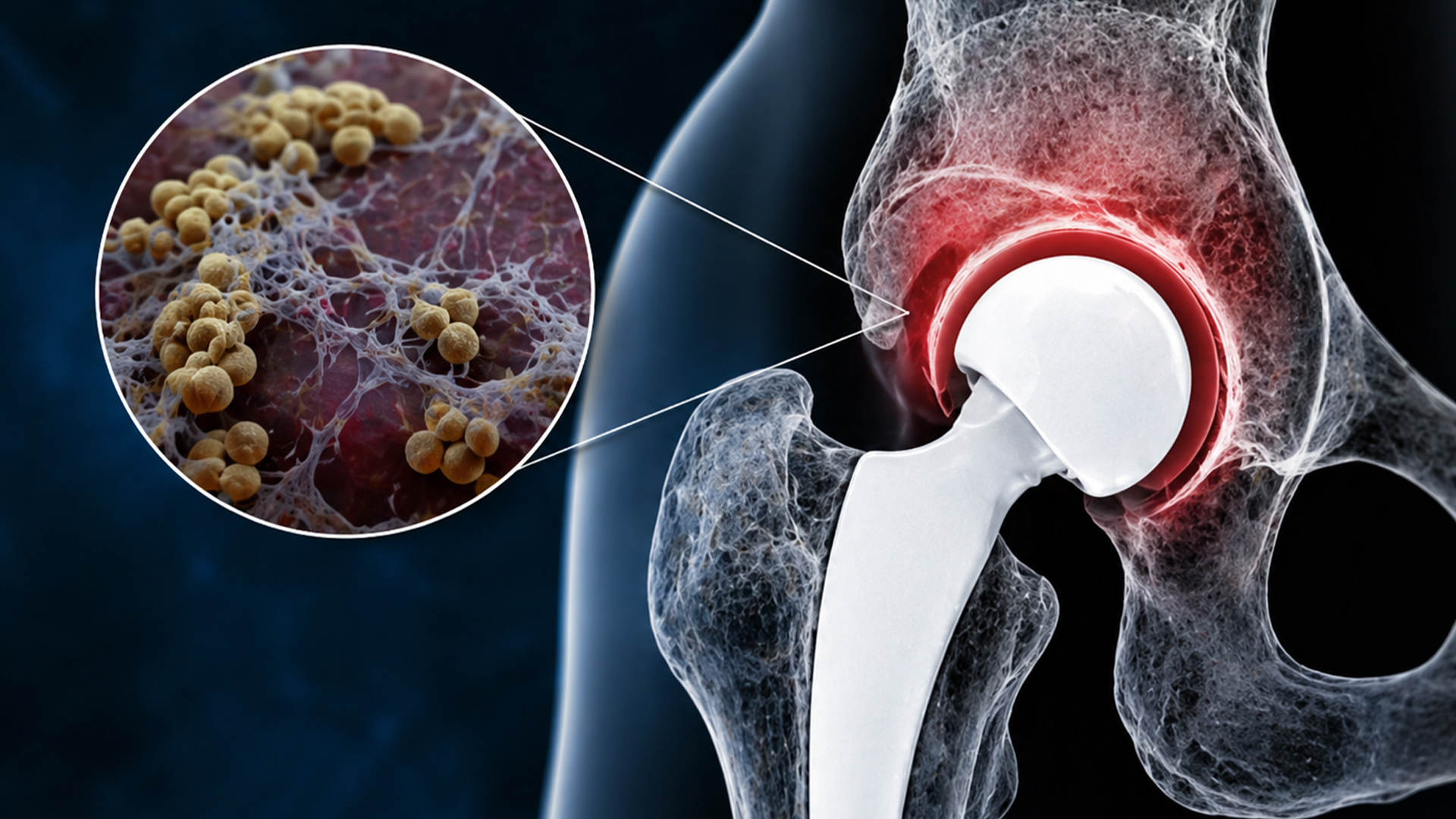
Illustration of an infection around a hip joint implant.
The image shows a hip implant with an infection inside the bone surrounding it (in red markup). The magnified area shows how the bacteria have formed a protective layer, known as a biofilm, which makes them much more resistant against antibiotics. Thus, the image illustrates why treating infections around implants is so challenging—and why more targeted treatments are needed. Image generated using ChatGPT.

Promising results

The technology has proven highly effective across a wide range of trials in models that optimally mimic severe bone and joint-associated infections in humans.

For example, established infections were effectively combated in all the pigs treated in a trial conducted in collaboration with a team of specialist orthopedic surgeons led by Professor of Experimental Pathology Louise Kruse Jensen—without the use of any other antibiotics. No other technology or treatment has previously come close to achieving such good results.

“I think we were all surprised at how well this worked,” Jonas Rosager Henriksen admits.

He explains that not only was the treatment far more effective than any of the others evaluated by the same research group, but it is also unique in that the results were achieved without the use of systemic antibiotics. The results suggest that in future, doctors will be able to prescribe far fewer antibiotics and still achieve better outcomes for patients with these serious infections.

A different business model

It is usually an uphill struggle if you dream of developing new antibiotics – partly because funding is hard to come by, as the return on investment is typically very poor, says Jonas Rosager Henriksen:

“It’s usually difficult because if a company succeeds in developing a new antibiotic, it’s seen as a last-resort drug. That means it’s put on the very top shelf as something to be reserved for a few patients to limit the risk of bacteria developing resistance to it.”

This does not apply to Precision Antibiotics’ product, he explains:

“We have taken two approved antibiotics and, in a sense, simply modified the formulation technique, making them much more potent by developing a way to use them locally.”

With the promising results from the trials in hand, the company has raised 60 million Danish kroner to fund the first clinical trials in humans. The company expects to start phase 1 of the clinical trials in 2027.
Facts

  • The spin-out was founded in 2025. 
  • It was established by DTU researchers and drug delivery experts Jonas Rosager Henriksen, Anders E. Hansen and Thomas L. Andresen.
  • Research into the technology started in 2020, and the work has been partly funded by grants from the Innovation Fund and the Novo Nordisk Foundation.
  • The company hopes to commence phase 1 of clinical trials in 2027. 
  • The technology is also expected to be effective in treating conditions such as diabetic foot ulcers, which are both a major problem with high mortality rates and a large market.

Work on developing the drug delivery depot has been described in e.g. these two scientific papers: